The value of itinerant fragments between Asia Minor and Europe
DOI:
https://doi.org/10.48258/ARC.2025.I3.2166Keywords:
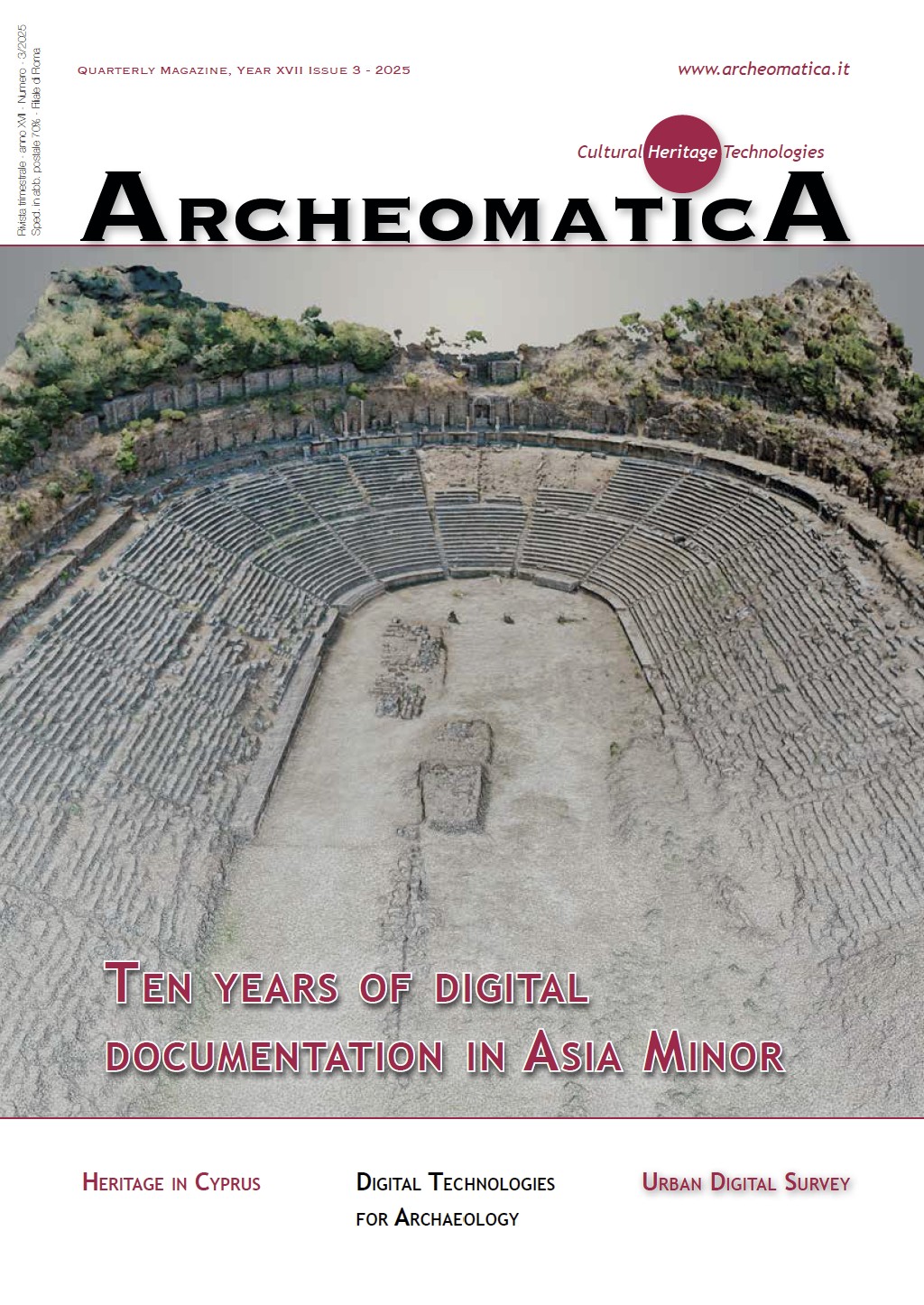
built heritage, digital recomposition, digital technologies, fragments, photogrammetry, laser scanning, 3d modelling, spatial relationshipAbstract
Built heritage constitutes a layered record of human activity, often surviving as fragmented architecture and dispersed
artefacts. Historical excavation practices frequently removed architectural elements from their original
contexts, generating spatial and interpretive disconnections. This study explores the potential of digital technologies
to virtually reunite displaced heritage, focusing on selected statues and architectural fragments from the Hellenistic
city of Priene, now divided between the archaeological site and museums in Berlin. Through photogrammetry, laser
scanning, and 3D modelling, the research investigates original spatial relationships and proposes a dual framework in
which digital recomposition enhances both archaeological interpretation and museum presentation while preserving
the integrity of the original artefacts.
Downloads
Published
Issue
Section
License
Gli autori che pubblicano su questa rivista accettano le seguenti condizioni:- Gli autori mantengono i diritti sulla loro opera e cedono alla rivista il diritto di prima pubblicazione dell'opera, contemporaneamente licenziata sotto una Licenza Creative Commons - Attribuzione che permette ad altri di condividere l'opera indicando la paternità intellettuale e la prima pubblicazione su questa rivista.
- Gli autori possono aderire ad altri accordi di licenza non esclusiva per la distribuzione della versione dell'opera pubblicata (es. depositarla in un archivio istituzionale o pubblicarla in una monografia), a patto di indicare che la prima pubblicazione è avvenuta su questa rivista.
- Gli autori possono diffondere la loro opera online (es. in repository istituzionali o nel loro sito web) prima e durante il processo di submission, poiché può portare a scambi produttivi e aumentare le citazioni dell'opera pubblicata (Vedi The Effect of Open Access).